
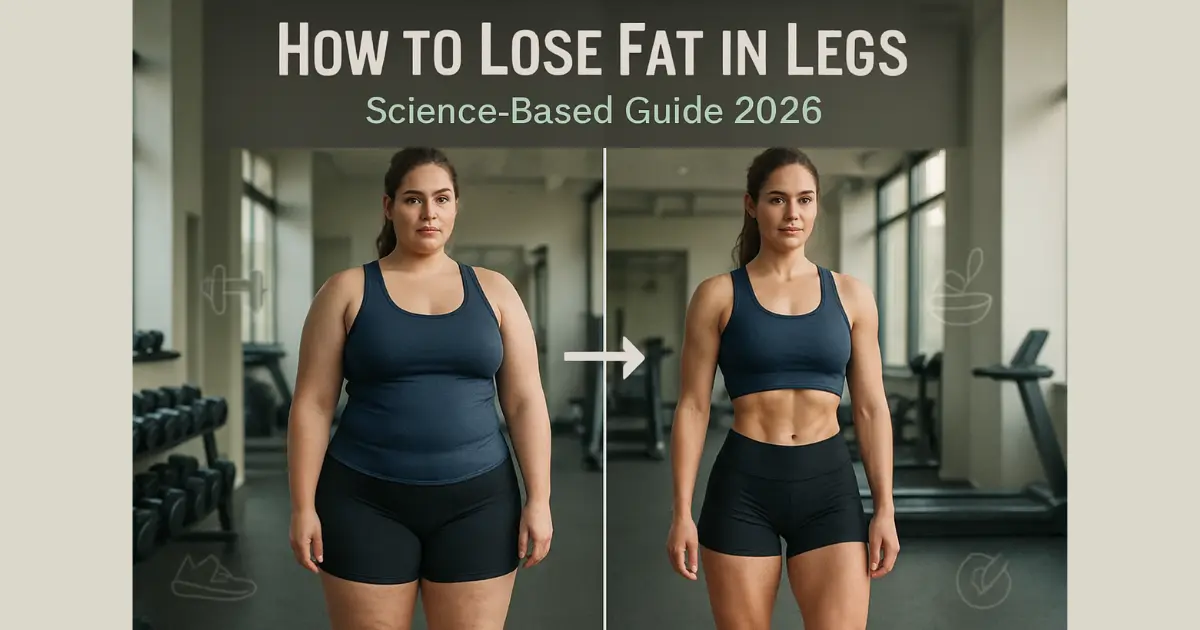
Leg fat is one of the most stubborn areas to lose—especially for women, who are genetically predisposed to store more fat in the lower body.
If you’ve been struggling with excess leg fat, thigh fullness, or lower body weight that seems resistant to diet and exercise, you’re far from alone. Millions of people face this exact challenge, trying targeted exercises, restrictive diets, or quick fixes without understanding why leg fat is so persistent and what actually works to reduce it.
The frustration is real: you might lose weight from your upper body, see changes in your face and arms, yet your legs seem to stay the same. You might wonder if there’s something wrong with your approach—or if it’s even possible to achieve leaner, more defined legs.
This article reveals exactly how to lose fat in legs using science-backed strategies that address the real factors at play: hormonal influences, genetic fat distribution patterns, proper nutrition, effective exercise protocols, and realistic timelines for visible results. You’ll learn why how to lose fat in legs requires a different mindset than other areas, what the science says about stubborn lower body fat, and the proven strategies that actually work.
After more than 10 years researching body composition and helping clients achieve their weight loss goals, I’ve learned what actually works for stubborn lower body fat versus the myths and quick fixes that waste time and effort. Understanding how to lose fat in legs requires acknowledging biological realities—particularly for women—while implementing strategies that work with your body, not against it.
Whether you’re dealing with genetic leg fat storage, hormonal factors, or simply want to understand the most effective approach to how to lose fat in legs, this comprehensive guide provides the science, strategies, and realistic expectations you need for success.
Quick Answer: Can You Actually Lose Fat in Your Legs?
Yes, you can lose fat in your legs, but not through spot reduction. Leg fat decreases when overall body fat is reduced through a calorie deficit, proper nutrition, and exercise. However, genetics and hormones (especially estrogen) determine where your body stores and loses fat, making leg fat particularly stubborn for many women.
This is the fundamental truth about how to lose fat in legs: you cannot selectively target leg fat for reduction. Your body loses fat systemically—from all areas simultaneously—based on genetic patterns and hormonal factors you cannot directly control.
However, this doesn’t mean you’re powerless. While you can’t choose where fat comes off first, you can create the conditions for total body fat loss that will eventually reduce leg fat. For many people, especially women, legs are among the last places to lose fat, which means patience and consistency are essential.
The good news: the same strategies that reduce total body fat will eventually slim your legs. The challenge: leg fat is physiologically more stubborn than fat in other areas due to receptor types, hormones, and genetics—factors we’ll explore in detail throughout this article.
Why Is Leg Fat So Stubborn? Understanding Lower Body Fat Storage
Before diving into solutions, you need to understand why leg fat is particularly resistant to loss. This isn’t just about calories—it’s about biology, hormones, and genetics.
Genetics and Gender Differences in Fat Distribution
The first factor in understanding how to lose fat in legs is recognizing that fat distribution is largely genetic and differs significantly between men and women.
Women are genetically predisposed to store more fat in legs, hips, and thighs—a pattern called gynoid fat distribution or “pear shape.” This isn’t a flaw or problem; it’s evolutionary biology. Lower body fat storage in women supported pregnancy and breastfeeding throughout human evolution, providing energy reserves for reproduction and infant nourishment.
Men typically store more fat in the abdomen—android fat distribution or “apple shape.” While abdominal fat carries greater health risks, it’s often easier to lose than lower body fat because of differences in fat cell receptors (which we’ll discuss shortly).
Evolutionary biology explains why women’s bodies prioritize lower body fat storage. From a survival perspective, having readily available energy stores in the lower body was advantageous for reproductive success. While we no longer face the same survival pressures, our genetics haven’t changed.
Genetics determine your body’s “preferred” fat storage sites. Some people store fat primarily in their legs and hips, others in their abdomen, and others distribute it more evenly. You cannot change your genetic blueprint, but you can optimize fat loss within your genetic framework.
According to research published in the International Journal of Obesity, gender differences in fat distribution are primarily driven by genetics and sex hormones, with women showing significantly greater lower body fat storage compared to men at equivalent body fat percentages.
Understanding these genetic factors is crucial for realistic expectations about how to lose fat in legs. If you’re genetically predisposed to lower body fat storage, you’ll need to achieve a lower overall body fat percentage to see significant leg definition compared to someone with different genetics.
Hormones: Estrogen, Insulin, and Fat Storage in Legs
Beyond genetics, hormones play a critical role in leg fat storage and mobilization—particularly for women.
Estrogen promotes fat storage in the lower body as a protective mechanism. Estrogen directs fat storage toward the hips, thighs, and legs rather than the abdomen. This is why women typically have more lower body fat than men, and why hormonal changes (puberty, pregnancy, menopause) significantly affect leg fat storage.
Alpha-adrenergic receptors in leg fat resist fat mobilization, while beta-adrenergic receptors in upper body fat promote it. This receptor difference is one of the primary reasons leg fat is more stubborn. We’ll explore this in detail in the next section, but the key point is that leg fat cells are physiologically more resistant to releasing stored fat compared to fat cells in other areas.
Insulin sensitivity varies by body region, with leg fat often being more insulin-resistant than abdominal fat. Higher insulin resistance means fat cells in the legs are more likely to store fat and less likely to release it. This is why managing blood sugar and insulin through proper nutrition is particularly important for how to lose fat in legs.
Hormonal fluctuations affect leg fat storage. Women experience cyclical hormonal changes during the menstrual cycle that can affect water retention and fat storage in the lower body. During menopause, declining estrogen levels change fat distribution patterns, often shifting storage from legs to the abdomen—though existing leg fat can remain stubborn.
According to the National Institutes of Health, estrogen’s influence on regional fat distribution is one of the primary factors explaining gender differences in body composition, with women showing preferential lower body fat accumulation throughout reproductive years.
Hormonal understanding is essential for how to lose fat in legs effectively. While you can’t eliminate hormonal influences, you can work with them through proper nutrition, exercise, stress management, and sleep—all of which affect hormone balance.
Alpha vs Beta Receptors: Why Leg Fat Is Harder to Mobilize
This is where the science gets particularly interesting—and explains why how to lose fat in legs requires extra patience.
Fat cells have alpha and beta-adrenergic receptors that control fat release in response to hormones like epinephrine and norepinephrine. These receptors act like switches that either promote or inhibit fat mobilization.
Beta receptors (abundant in upper body fat) promote fat mobilization. When activated by hormones during exercise or calorie deficit, beta receptors signal fat cells to break down stored fat and release fatty acids into the bloodstream to be burned for energy. This is why upper body fat often decreases more quickly.
Alpha receptors (abundant in leg and thigh fat) inhibit fat mobilization. When activated, alpha receptors actually prevent fat breakdown and release. This creates a physiological resistance to fat loss in areas with high alpha receptor density—particularly the legs, hips, and thighs in women.
The ratio of alpha to beta receptors makes leg fat more stubborn. Areas with more beta receptors (upper body, abdomen in men) lose fat more readily. Areas with more alpha receptors (legs, hips, thighs in women) resist fat loss even when you’re in a calorie deficit and losing fat from other areas.
This isn’t just theory—it’s measurable physiology. Studies have shown that fat cells in the lower body have significantly higher alpha-to-beta receptor ratios, particularly in women, creating genuine physiological resistance to fat mobilization.
This physiological reality explains why how to lose fat in legs requires patience and consistency. You’re not doing anything wrong if your legs are the last place to slim down—you’re dealing with biological factors that make lower body fat inherently more stubborn.
The good news: while you can’t change your receptor distribution, sustained calorie deficit and proper exercise will eventually overcome this resistance. It just takes longer than other areas.
The Truth About Spot Reduction: Why Leg Exercises Alone Won’t Work
One of the most persistent myths about how to lose fat in legs is that targeted leg exercises will burn leg fat. Let’s address this directly.
The Spot Reduction Myth Debunked by Science
Spot reduction is scientifically impossible—you cannot target fat loss in specific areas through exercise or any other method. This has been thoroughly tested and consistently debunked in scientific research.
Fat is mobilized systemically through hormones (epinephrine, norepinephrine, cortisol) that signal fat cells throughout your entire body to release stored fatty acids. When you exercise or maintain a calorie deficit, these hormones don’t selectively target the area you’re working—they mobilize fat from all areas based on your genetic fat distribution pattern and receptor types.
Leg exercises build muscle but don’t preferentially burn leg fat. When you do squats, lunges, or leg presses, you’re working leg muscles and burning calories, but the fat being burned for energy comes from your entire body’s fat stores, not specifically from your legs. Just as spot reduction doesn’t work for any body part—including the face—it doesn’t work for legs either. Fat loss occurs systemically, not locally.
According to research published on PubMed, studies examining spot reduction consistently show that targeted exercise does not preferentially reduce fat in the exercised area. One famous study had participants perform hundreds of sit-ups for weeks—abdominal fat decreased no more than fat in other areas, and only when total body fat was reduced through calorie deficit.
Total body fat loss is the only way to reduce leg fat. You must create a calorie deficit through diet and exercise, lose fat systemically, and trust that your legs will eventually slim down as your overall body fat percentage decreases.
Understanding this is fundamental to how to lose fat in legs. If you’re spending hours doing leg exercises expecting targeted fat loss, you’re wasting effort that could be better spent on strategies that actually work: creating a calorie deficit, optimizing nutrition, and combining cardio with strength training.
What Leg Exercises Actually Do (Muscle vs Fat)
While leg exercises don’t burn leg fat specifically, they’re still valuable for how to lose fat in legs—just not for the reasons most people think.
Leg exercises (squats, lunges, leg press, deadlifts) build muscle and improve tone. Muscle tissue is metabolically active, meaning it burns calories even at rest. Building leg muscle increases your resting metabolic rate, helping you burn more calories throughout the day and making fat loss easier to achieve and maintain.
Muscle building increases metabolic rate, burning more calories at rest. For every pound of muscle you build, you burn approximately 6-10 additional calories per day at rest. While this might seem small, it adds up over time and makes maintaining a calorie deficit easier.
Improved muscle tone makes legs look better even before fat loss. Building muscle in your legs improves their shape, definition, and appearance. Even if you haven’t lost significant fat yet, stronger, more toned muscles create a more athletic, defined look. This is why strength training is crucial even during fat loss—you’re sculpting the shape that will be revealed as fat decreases.
Resistance training preserves muscle during calorie deficit. When you’re in a calorie deficit to lose fat, your body can break down muscle tissue for energy along with fat. Strength training signals your body to preserve muscle, ensuring that the weight you lose is primarily fat, not muscle. This is critical for maintaining metabolic rate and achieving the lean, defined leg appearance you want.
Leg exercises are part of the solution for how to lose fat in legs, but not through spot reduction. They work by building muscle (increasing metabolism), improving leg shape (better appearance), and preserving muscle during fat loss (ensuring you lose fat, not muscle).
The key is combining leg exercises with a calorie deficit and cardio for total body fat loss. This combination—not leg exercises alone—is what produces leaner, more defined legs.
How to Lose Fat in Legs: The Calorie Deficit Foundation
Now that you understand the biology and have realistic expectations, let’s explore the proven strategies for how to lose fat in legs.
Creating a Sustainable Calorie Deficit for Fat Loss
The foundation of how to lose fat in legs is the same as fat loss anywhere: creating a calorie deficit.
A calorie deficit is mandatory for fat loss—you must consume fewer calories than your body burns. This forces your body to mobilize stored fat for energy, gradually reducing fat tissue throughout your body, including your legs. There is no way around this fundamental requirement, regardless of what any product or program claims.
A moderate calorie deficit (300-500 calories below maintenance) is more sustainable than aggressive cuts. Calculate your maintenance calories (the amount you need to maintain current weight) and reduce by 300-500 calories daily. This creates steady fat loss of approximately 0.5-1 pound per week without triggering excessive hunger, metabolic slowdown, or muscle loss.
Losing 5-10% of your total body weight produces visible leg changes for most people. For someone weighing 150 pounds, this means losing 7.5-15 pounds. For someone weighing 180 pounds, it means losing 9-18 pounds. These modest reductions in total body weight often produce noticeable improvements in leg definition, particularly if you’re also building muscle through strength training.
Extreme diets cause muscle loss and metabolic slowdown, which is counterproductive for how to lose fat in legs. Severe calorie restriction (eating less than 1,000-1,200 calories daily) triggers metabolic adaptations: your body reduces metabolic rate, breaks down muscle for energy, and becomes more efficient at storing fat when you resume normal eating. The result: you lose muscle and slow your metabolism, making long-term fat loss harder.
Consistency over time is the real answer to how to lose fat in legs. A moderate, sustainable deficit maintained for 8-12 weeks will produce far better results than an aggressive deficit you can only maintain for 2-3 weeks before rebounding. Slow, steady fat loss preserves muscle, maintains metabolic rate, and creates sustainable results.
Body Fat Percentage and Leg Appearance
| Body Fat % (Women) | Body Fat % (Men) | Leg Appearance | Muscle Definition |
|---|---|---|---|
| 35%+ | 25%+ | Significant fullness, minimal definition | Minimal visible muscle |
| 30-35% | 20-25% | Moderate fullness | Some muscle tone visible |
| 25-30% | 15-20% | Leaner legs, visible shape | Good muscle definition |
| 20-25% | 10-15% | Defined legs, clear separation | Strong muscle definition |
| <20% | <10% | Very lean, athletic appearance | Very defined, vascular |
This table illustrates the relationship between overall body fat percentage and leg appearance. As you can see, significant leg definition typically requires achieving relatively low body fat percentages—particularly for women, who naturally carry more lower body fat. This is why how to lose fat in legs requires systematic total body fat loss, not quick fixes.
Nutrition Strategies That Accelerate Leg Fat Loss
While calorie deficit is mandatory, specific nutrition strategies can accelerate fat loss and reduce leg puffiness, helping you see results faster.
High protein intake (0.8-1g per pound of body weight) preserves muscle and boosts metabolism. Protein is essential for maintaining muscle mass during calorie deficit, has the highest thermic effect of all macronutrients (you burn more calories digesting it), and increases satiety (helping you feel full on fewer calories). For a 150-pound person, this means consuming 120-150g of protein daily from sources like chicken, fish, eggs, Greek yogurt, and lean beef.
Reduce processed foods and refined carbohydrates, which cause inflammation and water retention. Processed foods are typically high in sodium, refined carbs, and inflammatory ingredients that promote water retention—particularly noticeable in the legs. Eliminating or drastically reducing chips, frozen meals, canned soups, white bread, pastries, and sugary snacks can reduce leg puffiness within days.
Increase potassium-rich foods like bananas, spinach, avocados, sweet potatoes, and white beans. Potassium helps balance sodium levels and reduces water retention. The typical Western diet is high in sodium and low in potassium—the opposite of optimal. Increasing potassium intake can significantly reduce leg puffiness by helping your body excrete excess sodium and water.
Stay hydrated by drinking 8-10 glasses of water daily to reduce leg puffiness. This seems counterintuitive—drinking more water to reduce water retention—but it works. When you’re chronically dehydrated, your body holds onto water as a protective mechanism, causing puffiness in the legs and other areas. When you’re consistently well-hydrated, your body releases stored water because it’s no longer in “conservation mode.”
These nutrition strategies optimize how to lose fat in legs by simultaneously supporting fat loss (through calorie deficit, preserved metabolism, and increased satiety) and reducing puffiness (through lower sodium, higher potassium, and proper hydration).
5 Foods That Cause Leg Bloating and Water Retention:
- High-sodium processed foods (chips, canned soups, frozen meals, deli meats)
- Refined carbohydrates (white bread, pastries, sugary snacks, white rice)
- Excessive alcohol (causes dehydration, inflammation, and vasodilation)
- Artificial sweeteners (may cause water retention in some people)
- Excessive dairy (can cause inflammation and bloating in sensitive individuals)
Eliminating or drastically reducing these foods can produce noticeable improvements in leg appearance within days, particularly if water retention is a significant factor.
Exercise Strategy: Cardio, Strength Training, and HIIT for Leg Fat Loss
Exercise is essential for how to lose fat in legs because it accelerates total body fat loss, builds muscle, and provides metabolic benefits that make fat loss easier to sustain.
Cardio for Maximum Fat Burning
Cardiovascular exercise is one of the most effective tools for how to lose fat in legs because it creates a larger calorie deficit and accelerates total body fat loss.
Cardio accelerates total fat loss by increasing calorie expenditure. Every cardio session burns calories, creating a larger deficit and faster fat loss. The more calories you burn through cardio, the faster you’ll lose total body fat—which eventually includes leg fat.
Aim for 3-5 cardio sessions per week, 30-45 minutes each at moderate intensity (60-70% of maximum heart rate). This could be brisk walking, jogging, cycling, swimming, stair climbing, or any activity that elevates your heart rate sustainably. Moderate intensity is sustainable long-term and burns primarily fat for fuel.
Walking, jogging, cycling, swimming, and stair climbing are all effective for how to lose fat in legs. Choose activities you enjoy and can sustain consistently. Walking is particularly accessible and low-impact, making it ideal for beginners or those with joint issues. Stair climbing and cycling specifically engage leg muscles while providing cardiovascular benefits.
Cardio creates a larger calorie deficit, which equals faster leg fat loss. If your diet creates a 300-calorie deficit and you burn an additional 300 calories through cardio, you’ve doubled your deficit to 600 calories daily. This accelerates fat loss significantly—potentially doubling the rate at which you lose leg fat.
Consistent cardio is essential for how to lose fat in legs. Three to five sessions per week, maintained consistently for 8-12 weeks, will produce noticeable changes in leg appearance as total body fat decreases.
Strength Training to Build Lean Leg Muscle
While cardio burns calories, strength training builds muscle—and muscle is essential for how to lose fat in legs while achieving the toned, defined appearance you want.
Compound leg exercises like squats, lunges, deadlifts, and leg press are the foundation of effective leg training. These exercises work multiple muscle groups simultaneously, burn significant calories, and build functional strength.
Building muscle increases resting metabolic rate, meaning you burn more calories even when you’re not exercising. Muscle tissue is metabolically active, requiring energy for maintenance and repair. The more muscle you have, the higher your baseline calorie burn—making fat loss easier to achieve and maintain.
Improved muscle tone makes legs look better even before fat loss. Strength training sculpts the shape that will be revealed as fat decreases. Even if you haven’t lost significant fat yet, stronger, more developed leg muscles create a more athletic, defined appearance.
Aim for 2-4 strength training sessions per week targeting legs. This could be dedicated leg days or full-body workouts that include leg exercises. Allow at least 48 hours between sessions targeting the same muscle groups for recovery and growth.
Strength training is crucial for how to lose fat in legs while maintaining muscle. Without resistance training during calorie deficit, you’ll lose muscle along with fat, resulting in a “skinny fat” appearance rather than the lean, toned legs you want.
Top 5 Leg Exercises for Fat Loss and Muscle Tone:
- Barbell Back Squats (compound movement, works entire lower body, high calorie burn)
- Walking Lunges (unilateral strength, improves balance, activates glutes and quads)
- Romanian Deadlifts (targets hamstrings, glutes, and posterior chain)
- Bulgarian Split Squats (single-leg strength, stability, intense muscle activation)
- Leg Press (allows high volume training, builds muscle mass)
These exercises, performed with proper form and progressive overload (gradually increasing weight or reps), will build lean muscle that improves leg appearance and supports fat loss.
HIIT: High-Intensity Interval Training for Stubborn Leg Fat
High-Intensity Interval Training (HIIT) is particularly effective for stubborn fat like leg fat due to its unique metabolic effects.
HIIT alternates high-intensity bursts with recovery periods. For example: 30 seconds of sprinting followed by 60 seconds of walking, repeated for 20-30 minutes. This creates a powerful metabolic stimulus that burns calories during the workout and for hours afterward.
HIIT burns more calories in less time compared to steady-state cardio. A 20-minute HIIT session can burn as many calories as 40-45 minutes of moderate-intensity cardio, making it time-efficient for busy schedules.
HIIT increases EPOC (excess post-exercise oxygen consumption), meaning you continue burning elevated calories for hours after the workout ends. This “afterburn effect” significantly increases total calorie expenditure, accelerating fat loss.
Aim for 2-3 HIIT sessions per week (20-30 minutes each). HIIT is intense and requires adequate recovery, so don’t overdo it. Two to three sessions weekly, combined with moderate-intensity cardio and strength training, creates an optimal exercise program for how to lose fat in legs.
HIIT is particularly effective for stubborn fat like leg fat because the intense metabolic stimulus helps overcome the physiological resistance created by alpha-adrenergic receptors. According to research published in the Journal of Obesity, HIIT has been shown to be particularly effective for reducing stubborn fat deposits compared to steady-state cardio alone.
Accelerating Results: Metabolism, Hormones, and Fat Loss Optimization
While the fundamentals (calorie deficit, nutrition, exercise) are non-negotiable, certain strategies can accelerate fat loss and help you see leg changes faster.
How Metabolic Boosting Supports Leg Fat Loss
Since how to lose fat in legs requires total body fat loss, anything that accelerates your metabolism will help you see leg changes sooner.
Leg fat responds to total body fat loss—the faster you lose body fat overall, the faster you’ll see changes in your legs. A faster metabolism means you burn more calories at rest and during activity, creating a larger calorie deficit and accelerating fat loss.
Caffeine increases fat oxidation by 10-29% depending on individual factors like body composition, caffeine tolerance, and timing. Caffeine stimulates the release of epinephrine, which signals fat cells throughout your body to break down stored fat and release fatty acids into the bloodstream. This mobilized fat can then be burned for energy, particularly during exercise.
Thermogenic compounds like green tea extract (EGCG), L-carnitine, and chromium support fat burning through complementary mechanisms. Green tea extract enhances caffeine’s effects by prolonging norepinephrine activity. L-carnitine helps transport fatty acids into mitochondria where they’re burned for energy. Chromium stabilizes blood sugar and improves insulin sensitivity, creating a more favorable metabolic environment for fat loss.
Metabolic strategies amplify calorie deficit effects. While you still need a calorie deficit, metabolism-boosting compounds can increase the rate of fat loss by 10-20%, which translates to seeing results weeks sooner.
While you can’t target fat loss in the legs directly, accelerating total body fat loss makes leg changes happen faster. Some people enhance their results by supporting metabolism with scientifically-backed compounds. Products like metabolism-boosting coffee supplements like Java Burn combine caffeine with green tea extract, L-carnitine, and chromium to amplify fat burning throughout the body, including stubborn lower body fat. For a detailed analysis of how these formulas work, read our comprehensive Java Burn Reviews 2026.
The key insight: how to lose fat in legs faster involves optimizing your metabolic rate through strategic use of caffeine, thermogenic compounds, and metabolism-supporting nutrients—always in combination with proper diet, exercise, and lifestyle habits.

Transform Your Coffee into a Fat Burner!
Discover the secret to naturally boosting your metabolism with Java Burn
I WANT TO TRY IT NOW →Sleep, Stress, and Cortisol’s Impact on Leg Fat
Sleep and stress are often overlooked factors in how to lose fat in legs, but they profoundly impact both fat storage and stubborn fat retention—particularly in the lower body for women.
Poor sleep increases cortisol, which promotes fat storage, especially in the lower body for women. When you’re sleep-deprived, your body produces more cortisol as a stress response. Elevated cortisol promotes fat storage (particularly in areas with high cortisol receptor density like the legs and abdomen), disrupts hunger hormones (making calorie deficit harder to maintain), and impairs recovery from exercise.
Aim for 7-9 hours of quality sleep per night. This isn’t just about duration—sleep quality matters too. Deep, restorative sleep allows cortisol to normalize, supports muscle recovery, optimizes hormone balance, and maintains metabolic health. Prioritizing sleep is one of the most underrated strategies for how to lose fat in legs.
Chronic stress elevates cortisol, leading to stubborn fat retention in the lower body. If you’re under constant stress from work, relationships, or life circumstances, your legs may retain fat more stubbornly regardless of your diet and exercise efforts. This is cortisol-driven fat retention, not necessarily excess calorie consumption.
Stress management techniques like meditation, yoga, deep breathing exercises, progressive muscle relaxation, or regular walks in nature can significantly reduce cortisol levels. According to Mayo Clinic, chronic stress and elevated cortisol are directly linked to altered fat distribution patterns, with women showing increased lower body fat retention under chronic stress conditions.
Even 10-15 minutes of daily stress management practice can produce noticeable improvements in fat loss and leg appearance within a few weeks by normalizing cortisol levels.
Sleep and stress management are often overlooked in how to lose fat in legs, but they’re just as important as diet and exercise. If you’re doing everything right with nutrition and training but sleeping poorly and living under chronic stress, your legs will likely remain stubbornly resistant to fat loss despite your efforts.
What Doesn’t Work: Myths About How to Lose Fat in Legs
Before we discuss timelines and expectations, let’s address common myths that waste time, money, and effort without delivering results.
Thigh Gap Obsession and Unrealistic Body Standards
One of the most damaging myths about how to lose fat in legs is the pursuit of a “thigh gap” or other unrealistic aesthetic ideals.
The “thigh gap” is primarily determined by bone structure (hip width and femur angle), not just body fat percentage. Some people will never have a thigh gap regardless of how lean they get because their bone structure doesn’t allow for it. Others have a thigh gap even at higher body fat percentages due to wider hip structure.
Pursuing extremely low body fat for aesthetic ideals can be unhealthy. Getting lean enough to achieve certain aesthetic standards may require body fat percentages that are difficult to maintain, disrupt hormonal function (particularly menstrual cycles in women), impair athletic performance, and negatively affect quality of life.
Focus on health, strength, and sustainable fat loss—not unrealistic standards promoted by social media, magazines, or fitness influencers. Your goal should be achieving a healthy body fat percentage where you feel strong, energetic, and confident—not conforming to arbitrary aesthetic ideals that may not be appropriate for your body type.
Body diversity is normal; not everyone will have the same leg shape. Genetics determine bone structure, muscle insertion points, fat distribution patterns, and overall body proportions. Two people at identical body fat percentages can have completely different leg appearances based on these genetic factors.
Realistic expectations are crucial for how to lose fat in legs. Your goal should be achieving the leanest, strongest, healthiest version of your own body—not trying to look like someone with completely different genetics.
Wraps, Creams, and Other Topical “Solutions”
The weight loss industry is full of products claiming to target leg fat through topical application. None of them work.
Topical creams and wraps do NOT burn fat—there is no scientific evidence supporting these claims. Fat is stored beneath the skin in adipose tissue. No cream or wrap can penetrate deep enough to affect fat cells, and even if they could, fat loss requires metabolic processes (calorie deficit, hormone signaling) that cannot be triggered topically.
These products may cause temporary water loss or skin tightening, creating the illusion of fat loss. Wraps that make you sweat cause temporary water loss (which returns as soon as you rehydrate). Creams with caffeine or other ingredients may temporarily tighten skin, creating a slightly firmer appearance. Neither represents actual fat loss.
These products are marketing gimmicks that waste money. The weight loss industry generates billions in revenue from products that don’t work by exploiting people’s desire for quick, easy solutions. Don’t fall for it.
Only calorie deficit and exercise reduce actual fat. There are no shortcuts, topical solutions, or magic products. How to lose fat in legs requires the same fundamental approach as losing fat anywhere: calorie deficit, proper nutrition, exercise, and time.
Avoid these scams when learning how to lose fat in legs. Save your money and invest it in quality food, a gym membership, or fitness equipment that actually supports your goals.
Extreme Diets and Dangerous Shortcuts
Some people, desperate for quick results, turn to extreme methods that can harm health and actually worsen leg fat long-term.
Extreme calorie restriction (eating less than 1,000-1,200 calories daily) causes significant muscle loss along with fat loss. Losing muscle slows your metabolism, making it harder to maintain fat loss long-term. Additionally, extreme restriction increases cortisol production, which can actually promote stubborn fat retention in the legs despite weight loss.
Crash diets lead to rapid regain, including leg fat. The weight you lose on extreme diets is often water and muscle, not primarily fat. When you resume normal eating (which is inevitable because extreme diets are unsustainable), you rapidly regain weight—often ending up with more fat than when you started due to lost muscle and metabolic slowdown.
Dehydration tactics are dangerous and cause rebound water retention. Some people intentionally dehydrate themselves to look leaner temporarily. This is extremely dangerous, damages metabolic health, impairs physical and cognitive performance, and triggers aggressive rebound water retention when you rehydrate—making your legs look puffier than before.
Sustainable, science-based methods are the only safe way for how to lose fat in legs. Shortcuts don’t work, and dangerous methods can cause lasting harm to your health, metabolism, and relationship with food and your body.
Realistic Timeline: How Long Does It Take to Lose Fat in Your Legs?
One of the most common questions about how to lose fat in legs is: how long will it take to see results?
What to Expect Week by Week
The timeline for leg fat loss depends on your starting body fat percentage, genetics, hormones, and consistency with diet and exercise.
Week 1-2: Reduced leg puffiness from lower sodium and better hydration. If you implement the nutrition strategies (reducing sodium, increasing potassium, staying hydrated), you’ll likely notice reduced leg puffiness within the first week or two. Your legs may look slightly slimmer and feel less heavy. This is water loss, not fat loss, but it’s motivating and makes your legs look leaner quickly.
Week 3-4: Slight reduction in leg fullness (if in calorie deficit). If you’ve been consistently maintaining a calorie deficit through diet and exercise, you’ll start losing actual body fat by weeks 3-4. For most people, this translates to subtle changes in leg appearance—your legs might look slightly slimmer, though the changes may not be dramatic yet. You’ll probably notice it more than others will at this stage.
Week 6-8: Noticeable changes in leg shape and muscle definition. By 6-8 weeks of consistent calorie deficit and exercise, most people experience noticeable leg changes. Your legs may appear leaner, muscle definition may become more visible, and your clothes may fit differently. This is when how to lose fat in legs starts producing visible, motivating results.
Week 12+: Significant leg fat loss (if consistent with deficit). After 12+ weeks of sustained fat loss, leg changes become dramatic for most people. Your legs will look noticeably leaner, muscle definition will be clear, and the overall shape will be significantly improved. This is the result of substantial total body fat reduction—typically 10-15+ pounds for most people.
Individual results vary based on genetics, starting body fat percentage, and hormones. Someone starting at 35% body fat may see leg changes sooner (because they have more fat to lose overall) than someone starting at 25% body fat. Similarly, genetic fat distribution patterns mean some people see leg changes relatively early, while others maintain leg fullness until they reach quite low body fat percentages.
Leg Fat Loss Timeline
| Timeframe | Expected Changes | What’s Happening |
|---|---|---|
| Days 1-7 | Reduced puffiness, less water retention | Lower sodium intake, better hydration reduces fluid retention |
| Weeks 2-4 | Slight leg slimming | Early fat loss begins; subtle changes in leg fullness |
| Weeks 4-8 | Noticeable shape changes, muscle definition | Consistent fat loss + muscle preservation from strength training |
| Weeks 8-12 | Significant leg fat reduction | Substantial body fat loss (10-15+ pounds lost) |
| 3+ months | Dramatic leg transformation | Sustained fat loss + lean muscle development = defined legs |
This timeline assumes consistent adherence to a moderate calorie deficit (300-500 calories), proper nutrition, regular exercise (cardio + strength training), adequate sleep, and stress management. Inconsistent adherence will extend the timeline proportionally.
Why Legs Are Often the Last Place to Lose Fat (Especially for Women)
Understanding why legs are stubborn helps set realistic expectations for how to lose fat in legs.
Genetic fat distribution means legs are often “last in, last out.” The areas where your body stores fat first are typically the last places to lose it. For many women, the legs, hips, and thighs are primary fat storage sites, meaning they’ll be among the last areas to slim down during fat loss.
Women’s bodies prioritize lower body fat storage due to evolutionary biology. Throughout human evolution, lower body fat supported reproduction and infant nourishment. While we no longer face the same survival pressures, our genetics haven’t changed. Women’s bodies are biologically programmed to maintain lower body fat stores.
Alpha-adrenergic receptors in leg fat resist mobilization, as we discussed earlier. This physiological resistance means leg fat is literally harder to mobilize and burn compared to fat in other areas with more beta receptors.
Upper body fat typically decreases first, then lower body. Most people notice fat loss in their face, arms, and upper body before seeing significant changes in their legs. This is normal and doesn’t mean you’re doing anything wrong—it’s simply the order in which your body loses fat based on genetics and receptor distribution.
Patience and consistency are essential for how to lose fat in legs. If you’re a woman with significant lower body fat storage, you may need to achieve a relatively low body fat percentage (20-25% or lower) to see the leg definition you want. This requires months of consistent effort, not weeks.
The good news: while legs may be the last place to lose fat, they will eventually respond to sustained calorie deficit and proper training. Trust the process, stay consistent, and understand that slower progress doesn’t mean no progress.
The Bottom Line: How to Lose Fat in Legs
After examining the science, strategies, and realistic timelines, here’s the definitive answer on how to lose fat in legs:
You cannot spot-reduce leg fat, but total body fat loss through a calorie deficit, proper nutrition, and exercise will naturally slim your legs over time. This is the fundamental truth that all effective strategies are built upon. Anyone claiming you can target leg fat specifically is either misinformed or misleading you.
Key strategies for how to lose fat in legs include:
- Creating a moderate calorie deficit (300-500 calories below maintenance)
- High protein nutrition (0.8-1g per lb body weight) to preserve muscle and boost metabolism
- Cardio exercise (3-5 sessions per week, 30-45 minutes) for maximum calorie burn
- Strength training (2-4 sessions per week) to build lean muscle and improve leg shape
- HIIT workouts (2-3 sessions per week) for stubborn fat mobilization
- Quality sleep (7-9 hours nightly) to normalize cortisol and support fat loss
- Stress management to control cortisol and reduce stubborn fat retention
- Optional metabolism boosters like caffeine and thermogenic compounds to accelerate results
Realistic timeline: 8-12 weeks for noticeable changes in leg appearance, with dramatic transformation typically requiring 3+ months of consistent effort. Leg puffiness from water retention can improve within days, but actual fat loss takes weeks to months—particularly for women with genetic lower body fat storage.
Avoid time-wasting or dangerous methods: spot reduction exercises, thigh gap obsession, wraps and creams, extreme diets, and dehydration tactics. These don’t work and can be harmful.
Accelerate results through metabolism-boosting strategies like strategic caffeine use, thermogenic compounds, and unwavering consistency with fundamentals. The faster you lose total body fat, the sooner you’ll see leg changes.
Leg fat is stubborn but responds to consistent, science-based fat loss strategies. The biological factors that make leg fat resistant (genetics, hormones, receptor types) are real, but they’re not insurmountable. With the right approach, realistic expectations, and sustained effort, you can achieve leaner, more defined legs.
Leg fat is one of the most stubborn areas to lose, especially for women—but with the right strategies, consistency, and realistic expectations, you can achieve leaner, more defined legs over time. The key is understanding that how to lose fat in legs isn’t about quick fixes or targeted exercises—it’s about systematic total body fat loss combined with muscle-building exercise and patience with your body’s genetic patterns.
Want to accelerate full-body fat loss and see faster changes in your legs? Explore our science-backed guides on metabolism, nutrition, and fat-burning strategies for optimal results.
Frequently Asked Questions About How to Lose Fat in Legs
How long does it take to lose fat in your legs?
Most people notice reduced leg puffiness within 1-2 weeks of improving diet and hydration. Actual leg fat loss becomes visible after 6-8 weeks of consistent calorie deficit and exercise. Significant changes in how to lose fat in legs typically require 8-12 weeks of sustained effort, with dramatic results taking 3+ months.
Why do I have fat legs but a flat stomach?
Fat distribution is primarily genetic. Women are genetically predisposed to store more fat in legs, hips, and thighs due to estrogen and evolutionary biology. This is called gynoid fat distribution and is completely normal. Understanding how to lose fat in legs requires accepting genetic patterns while optimizing fat loss strategies.
Can walking help lose leg fat?
Yes, walking helps lose leg fat by creating a calorie deficit and burning total body fat. Walking 30-45 minutes daily, 5 times per week, significantly contributes to fat loss. While you can’t target leg fat specifically, consistent walking is an effective, low-impact strategy for how to lose fat in legs.
Do squats burn leg fat?
Squats build leg muscle and increase metabolic rate but don’t directly burn leg fat through spot reduction. They contribute to total calorie expenditure and improve leg shape and tone. Combined with a calorie deficit and cardio, squats are valuable for how to lose fat in legs by building muscle and boosting metabolism.
Why is leg fat so hard to lose?
Leg fat is stubborn due to genetics, hormones (especially estrogen), and alpha-adrenergic receptors that resist fat mobilization. Women are genetically predisposed to store more lower body fat. These physiological factors make leg fat one of the last areas to lose. Understanding how to lose fat in legs requires patience and consistency.
Is leg fat genetic?
Yes, leg fat distribution is largely genetic. Your genes determine where your body preferentially stores and loses fat. Some people are predisposed to more leg fat even at healthy weights. While you can’t change genetics, you can optimize fat loss strategies. How to lose fat in legs means working with your genetics, not against them.

Holly Lee is the founder of Holly Lee Health and a passionate wellness researcher with over 10 years of experience in nutrition and holistic living. Frustrated by misleading health advice, she started this platform to provide honest, science-backed reviews of supplements and fitness strategies. Her goal is to help you make informed decisions for a healthier life.


