
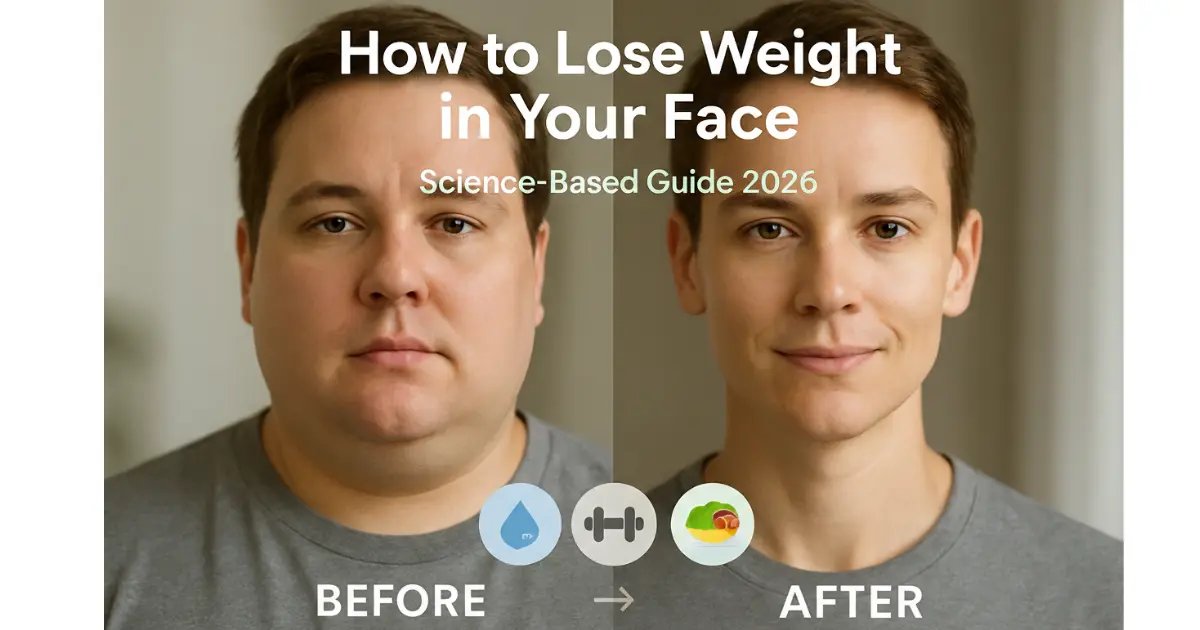
Have you ever lost weight successfully but still feel like your face looks rounder or puffier than you’d like?
You’re not alone. Millions of people struggle with facial fullness, puffiness, or “chubby cheeks” even when they’re at a healthy body weight. Facial appearance profoundly affects confidence and self-image, yet many people don’t know whether what they’re seeing is actual fat, water retention, or simply genetics at work.
If you’ve been searching for answers on how to lose weight in your face, you’ve probably encountered conflicting advice—from face yoga exercises to extreme diets to magical creams. The truth is more nuanced and more scientific than most sources admit.
This article reveals exactly how to lose weight in your face using science-backed strategies that address the real causes: facial fat storage, water retention, inflammation, hormonal factors, and realistic timelines for visible results. You’ll learn why spot reduction doesn’t work, what actually does, and how long it takes to see changes.
After more than 10 years researching body composition and helping clients achieve their weight loss goals, I’ve learned what actually works for facial fat loss versus the myths and quick fixes that waste time and money.
Whether you’re dealing with genuine facial fat or temporary puffiness, understanding how to lose weight in your face requires a comprehensive approach based on physiology, not promises. Let’s explore the science and practical strategies that deliver real, sustainable results.
Quick Answer: Can You Actually Lose Weight in Your Face?
Yes, you can lose weight in your face, but not through spot reduction. Facial fat decreases when overall body fat is reduced through a calorie deficit, proper nutrition, and exercise. However, facial puffiness from water retention, inflammation, or high sodium can improve within days through lifestyle changes.
The key distinction here is critical: facial fat (actual adipose tissue stored in your cheeks, jawline, and chin) requires systematic fat loss through calorie deficit and exercise. This takes weeks to months.
Facial puffiness (temporary swelling from water retention, inflammation, or high sodium intake) can improve dramatically within 24-48 hours by addressing the underlying causes.
Most people dealing with facial fullness have a combination of both, which is why understanding how to lose weight in your face requires addressing multiple factors simultaneously.
What Causes Weight Gain and Puffiness in Your Face?
Before diving into solutions, you need to understand what’s actually causing facial fullness. The strategies for reducing fat versus reducing puffiness are different, and misidentifying the problem leads to frustration and wasted effort.
Facial Fat vs. Facial Puffiness: Understanding the Difference
The first step in learning how to lose weight in your face is distinguishing between two fundamentally different conditions that both make your face appear fuller.
Facial fat is actual subcutaneous fat tissue stored beneath the skin in your cheeks, jawline, chin, and neck. This is adipose tissue—the same type of fat stored throughout your body. It accumulates gradually over time when you’re in a calorie surplus, and it decreases gradually when you’re in a calorie deficit. Facial fat is relatively stable day-to-day and requires weeks to months of consistent fat loss to reduce noticeably.
Facial puffiness is temporary swelling caused by water retention, inflammation, or bloating. It’s not actual fat tissue but rather fluid accumulation in facial tissues. Puffiness can fluctuate dramatically within 24-48 hours based on sodium intake, hydration status, sleep quality, alcohol consumption, and hormonal factors. You might wake up with a puffy face after a high-sodium meal or poor sleep, then look noticeably leaner by evening.
Many people have a combination of both—underlying facial fat plus variable puffiness that makes their face look fuller on some days than others. According to Harvard Health Publishing, understanding the difference between fat storage and fluid retention is essential for choosing effective strategies.
Identifying which you’re dealing with determines the right approach for how to lose weight in your face. If it’s primarily puffiness, you can see dramatic improvements within days. If it’s actual fat, you need a systematic fat loss approach that takes weeks to months.
Hormones, Sodium, and Inflammation That Affect Facial Appearance
Several physiological factors beyond simple calorie balance significantly impact facial appearance, particularly puffiness and water retention.
Cortisol, your body’s primary stress hormone, plays a major role in facial appearance. Chronically elevated cortisol from stress, poor sleep, or overtraining increases facial water retention and promotes fat storage, particularly in the face and midsection. This is why people under chronic stress often develop a “moon face” appearance—rounded, puffy facial features caused by cortisol-driven fluid retention and fat accumulation.
High sodium intake is one of the most common causes of facial puffiness, especially noticeable in the morning. When you consume excess sodium (most Americans consume 3,400mg daily versus the recommended 2,300mg), your body retains water to maintain proper sodium-to-water balance. This extra fluid accumulates in tissues throughout your body, including your face. According to Mayo Clinic, reducing sodium intake can significantly decrease facial bloating within 24-48 hours.
Alcohol consumption causes facial swelling through multiple mechanisms: it’s a diuretic that leads to dehydration (triggering compensatory water retention), it causes vasodilation (blood vessel expansion) that makes your face appear flushed and puffy, and it promotes inflammation. This is why people often wake up with a puffy face after drinking alcohol the night before.
Chronic inflammation from poor diet quality, lack of sleep, chronic stress, or underlying health conditions affects facial appearance by promoting fluid retention and tissue swelling. Pro-inflammatory foods (refined carbohydrates, excessive omega-6 fatty acids, trans fats) and lifestyle factors (sleep deprivation, chronic stress) create a systemic inflammatory state that manifests visibly in facial puffiness.
Understanding these factors is crucial for how to lose weight in your face effectively. If hormonal imbalances, high sodium, or inflammation are primary drivers, addressing these factors can produce rapid improvements in facial appearance—often within days.
Genetics and Body Fat Distribution Patterns
While lifestyle factors are within your control, genetics play a significant role in facial fat storage and must be acknowledged for realistic expectations.
Genetics determine where your body preferentially stores fat and, equally important, where it loses fat first (and last). Some people are genetically predisposed to store more fat in their face, even at relatively low overall body fat percentages. Others maintain a lean face even when carrying excess body fat elsewhere.
Body type classifications (“apple” vs “pear” shapes) reflect genetic fat distribution patterns. People with “apple” body types tend to store more fat in the upper body, including the face and midsection. “Pear” types store more fat in the hips and thighs, often maintaining a leaner face even at higher body weights.
You cannot change your genetic fat distribution pattern, but you can optimize your fat loss strategy to work with your genetics rather than against them. If you’re genetically predisposed to facial fat storage, you’ll need to achieve a lower overall body fat percentage to see significant facial definition compared to someone with different genetics.
Realistic expectations are key when learning how to lose weight in your face. If your parents and siblings have fuller faces even at healthy weights, you may need to accept that some degree of facial fullness is your genetic baseline. However, you can still optimize your facial appearance by reducing excess fat, minimizing puffiness, and achieving the leanest version of your genetic potential.
How to Lose Weight in Your Face Through Overall Fat Loss
Now that you understand what causes facial fullness, let’s explore the proven strategies for reducing it. The foundation of how to lose weight in your face is understanding and implementing systematic fat loss.
Why Spot Reduction Is a Myth (But Total Fat Loss Works)
This is the most important concept to understand about how to lose weight in your face: spot reduction is scientifically impossible.
You cannot selectively burn fat from one specific area of your body, including your face. No amount of facial exercises, face yoga, or targeted movements will preferentially burn facial fat. This isn’t opinion—it’s established physiology confirmed by decades of research.
Fat is mobilized systemically through hormones, primarily epinephrine (adrenaline) and norepinephrine. When you’re in a calorie deficit and your body needs energy, these hormones signal fat cells throughout your entire body to release stored fatty acids into the bloodstream. Your body doesn’t selectively mobilize fat from the area you’re exercising or focusing on—it mobilizes fat systemically based on hormonal signals.
According to research published on PubMed, spot reduction has been thoroughly debunked. Studies examining targeted exercise (like doing hundreds of sit-ups to lose abdominal fat) consistently show that fat loss occurs systemically, not locally.
When you lose body fat through a calorie deficit and exercise, your face will naturally slim down as part of overall fat reduction. The rate at which your face slims relative to other areas depends entirely on your genetic fat distribution pattern—something you cannot control.
Genetics determine the order in which fat is lost from different areas. Some people lose facial fat early in their fat loss journey, while others maintain facial fullness until they reach quite low body fat percentages. This variability is normal and doesn’t reflect anything you’re doing wrong.
The only proven method for how to lose weight in your face is reducing overall body fat through a calorie deficit, proper nutrition, and exercise. Any product, program, or technique claiming to target facial fat specifically is either misleading or outright fraudulent.
Creating a Calorie Deficit: The Foundation of Fat Loss
Since spot reduction is impossible, how to lose weight in your face fundamentally requires creating a calorie deficit to reduce total body fat.
A calorie deficit is mandatory for fat loss—you must consume fewer calories than your body burns. This forces your body to mobilize stored fat for energy, gradually reducing fat tissue throughout your body, including your face. There is no way around this fundamental requirement.
Losing 5-10% of your total body weight typically produces visible facial changes for most people. For someone weighing 180 pounds, this means losing 9-18 pounds. For someone weighing 150 pounds, it means losing 7.5-15 pounds. These modest reductions in total body weight often produce noticeable improvements in facial definition.
A moderate calorie deficit (300-500 calories below maintenance) is more sustainable than aggressive cuts. Extreme deficits (1,000+ calories below maintenance) may produce faster initial weight loss but are difficult to maintain, often lead to muscle loss, and can trigger metabolic adaptations that slow fat loss over time.
Extreme diets can actually worsen water retention and stress, counterproductively making your face appear puffier despite fat loss. Severe calorie restriction increases cortisol production, which promotes water retention and can give your face a puffy appearance even as you’re losing fat. This is why people on crash diets sometimes report that their face looks worse despite losing weight.
Consistency over time is the real answer to how to lose weight in your face. A moderate, sustainable deficit maintained for 8-12 weeks will produce far better results than an aggressive deficit you can only maintain for 2-3 weeks before rebounding.
Body Fat Percentage and Facial Changes
| Body Fat % (Men) | Body Fat % (Women) | Facial Appearance | Jawline Definition |
|---|---|---|---|
| 25%+ | 35%+ | Rounded, fuller cheeks | Minimal definition |
| 20-25% | 30-35% | Moderate fullness | Some definition |
| 15-20% | 25-30% | Leaner face | Good definition |
| 10-15% | 20-25% | Defined cheekbones | Sharp jawline |
| <10% | <20% | Very lean, angular | Very defined |
This table illustrates the relationship between overall body fat percentage and facial appearance. As you can see, significant facial definition typically requires achieving relatively low body fat percentages—another reason why how to lose weight in your face requires systematic total body fat loss, not quick fixes.
Lifestyle Strategies: How to Lose Weight in Your Face Faster
While creating a calorie deficit is the foundation, specific lifestyle strategies can accelerate facial fat loss and dramatically reduce puffiness, helping you see results faster.
Nutrition Changes That Reduce Facial Fat and Bloating
Strategic nutrition choices support both fat loss and reduced facial puffiness, making them essential for how to lose weight in your face.
Reduce processed foods high in sodium and refined carbohydrates. These foods are the primary culprits behind facial bloating and puffiness. Processed foods typically contain 2-3 times more sodium than whole foods, and refined carbohydrates cause rapid blood sugar spikes followed by crashes that promote inflammation and water retention. Eliminating or drastically reducing chips, canned soups, deli meats, white bread, pastries, and sugary snacks can reduce facial puffiness within 24-48 hours.
Increase protein intake to 0.8-1g per pound of body weight. Higher protein intake serves multiple purposes for how to lose weight in your face: it preserves muscle mass during calorie deficit (maintaining metabolic rate), increases satiety (making calorie deficit easier to maintain), and has a higher thermic effect than carbohydrates or fats (you burn more calories digesting protein). For a 150-pound person, this means consuming 120-150g of protein daily.
Eat potassium-rich foods like bananas, spinach, avocados, sweet potatoes, and white beans. Potassium helps balance sodium levels and reduces water retention. The typical Western diet is high in sodium and low in potassium—the opposite of what’s optimal. Increasing potassium intake can significantly reduce facial puffiness by helping your body excrete excess sodium and water.
Stay hydrated by drinking 8-10 glasses of water daily. This seems counterintuitive—drinking more water to reduce water retention—but it works. When you’re chronically dehydrated, your body holds onto water as a protective mechanism, causing puffiness. When you’re consistently well-hydrated, your body releases stored water because it’s no longer in “conservation mode.” Proper hydration is one of the simplest strategies for how to lose weight in your face by reducing puffiness.
These nutrition strategies accelerate results when learning how to lose weight in your face by simultaneously supporting fat loss (through calorie deficit and preserved metabolism) and reducing puffiness (through lower sodium, higher potassium, and proper hydration).
5 Foods That Make Your Face Look Bloated:
- High-sodium processed foods (chips, canned soups, deli meats, frozen dinners)
- Refined carbohydrates (white bread, pastries, sugary snacks, white rice)
- Alcohol (causes dehydration, inflammation, and vasodilation)
- Excessive dairy (can cause inflammation and bloating in sensitive individuals)
- Artificial sweeteners (may cause water retention in some people)
Eliminating or drastically reducing these foods can produce noticeable improvements in facial appearance within days, particularly if puffiness is a significant factor.
Exercise, Cardio, and Strength Training for Fat Loss
Exercise is essential for how to lose weight in your face because it accelerates total body fat loss and provides metabolic benefits that make fat loss easier to sustain.
Cardiovascular exercise accelerates total fat loss by increasing calorie expenditure. Aim for 3-5 cardio sessions per week, 30-45 minutes each, at moderate intensity (60-70% of maximum heart rate). This could be brisk walking, jogging, cycling, swimming, or any activity that elevates your heart rate sustainably. Cardio creates a larger calorie deficit, accelerating the fat loss that will eventually slim your face.
Strength training preserves muscle mass during calorie deficit, which is crucial for maintaining metabolic rate. When you lose weight, you inevitably lose some muscle along with fat—unless you’re actively resistance training. Losing muscle slows your metabolism, making further fat loss harder. Strength training 2-4 times per week preserves muscle, keeps your metabolism high, and ensures that the weight you’re losing is primarily fat, not muscle.
Exercise reduces systemic inflammation through multiple mechanisms: it improves insulin sensitivity, reduces inflammatory markers, promotes healthy circulation, and triggers anti-inflammatory responses. Since inflammation contributes to facial puffiness, regular exercise improves facial appearance beyond just fat loss.
A higher metabolic rate means faster visible results in your face. The combination of cardio (burning calories) and strength training (preserving metabolism) creates optimal conditions for fat loss, which translates to faster facial changes.
Combining both cardio and strength training is the most effective approach for how to lose weight in your face. Cardio maximizes calorie burn and fat loss, while strength training preserves muscle and metabolism. Together, they create sustainable, long-term fat loss that will naturally slim your face.
Sleep, Stress Management, and Cortisol Control
Sleep and stress are often overlooked factors in how to lose weight in your face, but they profoundly impact both fat storage and facial puffiness.
Poor sleep increases cortisol, which promotes facial puffiness and fat storage. When you’re sleep-deprived, your body produces more cortisol as a stress response. Elevated cortisol increases water retention (particularly in the face), promotes fat storage (especially in the face and midsection), and disrupts hunger hormones (making calorie deficit harder to maintain). According to research from the National Institutes of Health, sleep deprivation is directly linked to increased cortisol and facial swelling.
Aim for 7-9 hours of quality sleep per night. This isn’t just about duration—sleep quality matters too. Deep, restorative sleep allows cortisol to normalize, reduces inflammation, and supports metabolic health. Prioritizing sleep is one of the most underrated strategies for how to lose weight in your face.
Chronic stress elevates cortisol, creating a “moon face” appearance—rounded, puffy facial features characteristic of chronically elevated cortisol. If you’re under constant stress from work, relationships, or life circumstances, your face may appear fuller regardless of your body fat percentage. This is cortisol-driven water retention and fat storage, not necessarily excess calorie consumption.
Stress management techniques like meditation, yoga, deep breathing exercises, progressive muscle relaxation, or even regular walks in nature can significantly reduce cortisol levels. Even 10-15 minutes of daily stress management practice can produce noticeable improvements in facial puffiness within a week or two.
Sleep and stress are often overlooked factors in how to lose weight in your face, but they’re just as important as diet and exercise. If you’re doing everything right with nutrition and training but sleeping poorly and living under chronic stress, your face will likely remain puffy despite your efforts.
Accelerating Results: Metabolism, Caffeine, and Fat Loss
While the fundamentals (calorie deficit, nutrition, exercise, sleep) are non-negotiable, certain strategies can accelerate fat loss and help you see facial changes faster.
How Metabolic Boosting Supports Facial Fat Loss
Since how to lose weight in your face requires total body fat loss, anything that accelerates fat loss will help you see facial changes sooner.
Facial fat responds to total body fat loss—the faster you lose body fat overall, the faster you’ll see changes in your face. A faster metabolism means you burn more calories at rest and during activity, creating a larger calorie deficit and accelerating fat loss.
Caffeine increases fat oxidation by 10-29% depending on individual factors like body composition and caffeine tolerance. Caffeine stimulates the release of epinephrine, which signals fat cells to break down stored fat and release fatty acids into the bloodstream. This mobilized fat can then be burned for energy, particularly during exercise. How caffeine increases fat oxidation and supports total body fat loss is well-documented in scientific literature.
Thermogenic compounds like green tea extract (EGCG), L-carnitine, and chromium support fat burning through complementary mechanisms. Green tea extract enhances caffeine’s effects by prolonging norepinephrine activity. L-carnitine helps transport fatty acids into mitochondria where they’re burned for energy. Chromium stabilizes blood sugar and improves insulin sensitivity, creating a more favorable metabolic environment for fat loss.
Metabolic strategies amplify calorie deficit effects. While you still need a calorie deficit, metabolism-boosting compounds can increase the rate of fat loss by 10-20%, which translates to seeing results weeks sooner.
While you can’t target fat loss in the face directly, accelerating total body fat loss makes facial changes happen faster. Some people enhance their results by supporting metabolism with scientifically-backed compounds. Products like metabolism-boosting coffee supplements like Java Burn combine caffeine with green tea extract, L-carnitine, and chromium to amplify fat burning. For a detailed analysis of how these formulas work, read our comprehensive Java Burn Reviews 2026.
The key insight: how to lose weight in your face faster involves optimizing your metabolic rate through strategic use of caffeine, thermogenic compounds, and metabolism-supporting nutrients—always in combination with proper diet, exercise, and lifestyle habits.

Transform Your Coffee into a Fat Burner!
Discover the secret to naturally boosting your metabolism with Java Burn
I WANT TO TRY IT NOW →What Doesn’t Work: Myths About How to Lose Weight in Your Face
Before we discuss timelines and expectations, let’s address common myths that waste time and money without delivering results.
Face Yoga, Chewing Gum, and Facial Exercises
These are among the most popular—and most ineffective—strategies people try when learning how to lose weight in your face.
Face yoga does NOT burn facial fat. This is a fundamental misunderstanding of how fat loss works. Muscles don’t burn localized fat in the area they’re located. When you exercise a muscle, it burns calories systemically (drawing energy from your entire body’s fat stores), not locally. Doing facial exercises doesn’t signal your body to preferentially burn facial fat any more than doing bicep curls burns arm fat specifically.
Face yoga may improve muscle tone and skin elasticity, which can create a temporary improvement in facial appearance by tightening underlying muscles and improving skin quality. However, this is not fat loss—it’s improved muscle tone. If you have significant facial fat, face yoga won’t address it.
Chewing gum does NOT reduce face fat. This myth has no scientific basis whatsoever. While chewing gum does burn a trivial number of calories (about 11 calories per hour), this doesn’t translate to facial fat loss. The idea that working your jaw muscles will slim your face is based on the spot reduction myth we’ve already debunked.
Facial exercises can strengthen facial muscles but won’t eliminate fat. According to research published in the Journal of Clinical and Aesthetic Dermatology, facial exercises may improve muscle tone and skin appearance but have no significant effect on subcutaneous fat reduction.
These methods waste time when you could focus on proven strategies for how to lose weight in your face: creating a calorie deficit, proper nutrition, exercise, sleep, and stress management. If you’re spending 20 minutes daily on face yoga, you’d see far better results spending that time on cardio or strength training.
Extreme Diets, Dehydration, and Other Dangerous Shortcuts
Some people, desperate for quick results, turn to dangerous methods that can harm health and actually worsen facial appearance long-term.
Extreme calorie restriction (eating less than 1,000-1,200 calories daily) causes significant muscle loss along with fat loss. Losing muscle slows your metabolism, making it harder to maintain fat loss. Additionally, extreme restriction increases cortisol production, which can actually increase facial puffiness despite weight loss. The result: you lose weight but your face doesn’t look better—or looks worse.
Intentional dehydration makes your face look temporarily leaner by reducing water content in tissues. However, this is extremely dangerous, damages metabolic health, impairs physical and cognitive performance, and triggers rebound water retention when you rehydrate. Your body responds to dehydration by holding onto water more aggressively, making you look puffier than before.
Diuretics (water pills) are dangerous when used for cosmetic purposes. They can cause electrolyte imbalances, dehydration, kidney damage, and severe rebound water retention. Bodybuilders and physique competitors sometimes use diuretics before competitions, but this is done under medical supervision for a single day—not as a sustainable strategy.
Crash diets produce rapid initial weight loss (mostly water and muscle, not fat), but this weight returns just as quickly when you resume normal eating. The result is yo-yo dieting that damages metabolism and often leaves you with more facial fat than when you started.
Sustainable, science-based methods are the only safe way for how to lose weight in your face. Shortcuts don’t work, and dangerous methods can cause lasting harm to your health and metabolism.
Realistic Timeline: How Long Does It Take to Lose Weight in Your Face?
One of the most common questions about how to lose weight in your face is: how long will it take to see results?
What to Expect Week by Week
The timeline for facial changes depends on whether you’re addressing puffiness (fast) or actual fat loss (slower), as well as your starting body fat percentage and genetics.
Week 1-2: Reduced facial puffiness from lower sodium and better hydration. If you implement the nutrition strategies (reducing sodium, increasing potassium, staying hydrated) and improve sleep, you’ll likely notice reduced facial puffiness within the first week or two. Your face may look noticeably less puffy in the morning, and you might see slight improvements in definition. This is water loss, not fat loss, but it’s motivating and makes your face look leaner quickly.
Week 3-4: Slight reduction in facial fullness (if in calorie deficit). If you’ve been consistently maintaining a calorie deficit through diet and exercise, you’ll start losing actual body fat by weeks 3-4. For most people, this translates to subtle changes in facial appearance—your face might look slightly slimmer, though the changes may not be dramatic yet. You’ll probably notice it more than others will at this stage.
Week 6-8: Noticeable changes in cheek and jawline definition. By 6-8 weeks of consistent calorie deficit, most people experience noticeable facial changes. Your cheeks may appear less full, your jawline may become more defined, and others may start commenting that you look like you’ve lost weight. This is when how to lose weight in your face starts producing visible, motivating results.
Week 12+: Significant facial fat loss (if consistent with deficit). After 12+ weeks of sustained fat loss, facial changes become dramatic for most people. Your face will look noticeably leaner, your jawline will be more defined, and your cheekbones may become more prominent. This is the result of substantial total body fat reduction—typically 10-20+ pounds for most people.
Individual results vary based on starting body fat percentage and genetics. Someone starting at 30% body fat may see facial changes sooner (because they have more fat to lose) than someone starting at 18% body fat. Similarly, genetic fat distribution patterns mean some people see facial changes early in their fat loss journey, while others maintain facial fullness until they reach quite low body fat percentages.
Facial Fat Loss Timeline
| Timeframe | Expected Changes | What’s Happening |
|---|---|---|
| Days 1-7 | Reduced puffiness, less bloating | Water retention decreases from lower sodium, better hydration |
| Weeks 2-4 | Slight facial slimming | Early fat loss begins; subtle changes in facial fullness |
| Weeks 4-8 | Noticeable cheek/jawline changes | Consistent fat loss produces visible facial definition |
| Weeks 8-12 | Significant facial definition | Substantial body fat reduction (10-15+ pounds lost) |
| 3+ months | Dramatic transformation | Sustained fat loss + muscle preservation = lean, defined face |
This timeline assumes consistent adherence to a moderate calorie deficit (300-500 calories), proper nutrition, regular exercise, adequate sleep, and stress management. Inconsistent adherence will extend the timeline proportionally.
The Bottom Line: How to Lose Weight in Your Face
After examining the science, strategies, and realistic timelines, here’s the definitive answer on how to lose weight in your face:
You cannot spot-reduce facial fat, but total body fat loss through a calorie deficit will naturally slim your face over time. This is the fundamental truth that all effective strategies are built upon. Anyone claiming you can target facial fat specifically is either misinformed or misleading you.
Key strategies for how to lose weight in your face include:
- Creating a moderate calorie deficit (300-500 calories below maintenance)
- Proper nutrition: high protein, reduced sodium, increased potassium, adequate hydration
- Regular exercise: cardio for fat loss + strength training for muscle preservation
- Quality sleep: 7-9 hours nightly to normalize cortisol and reduce puffiness
- Stress management: meditation, yoga, or other techniques to control cortisol
- Optional metabolism boosters: caffeine and thermogenic compounds to accelerate fat loss
Realistic timeline: 6-12 weeks for noticeable changes in facial appearance, with dramatic transformation typically requiring 3+ months of consistent effort. Facial puffiness from water retention can improve within days, but actual fat loss takes weeks to months.
Avoid time-wasting or dangerous methods: face yoga, chewing gum, facial exercises, extreme diets, intentional dehydration, and diuretics. These don’t work and can be harmful.
Accelerate results through metabolism-boosting strategies like strategic caffeine use, thermogenic compounds, and consistent adherence to fundamentals. The faster you lose total body fat, the sooner you’ll see facial changes.
Facial changes are often one of the first visible signs of successful fat loss, making the face one of the most motivating areas to track progress. Many people notice facial changes before they see significant changes in other areas, which provides powerful motivation to continue.
The face is often where people first notice weight loss results—making it one of the most motivating areas to track progress. When friends, family, and coworkers start commenting that you “look different” or “look great,” it’s usually because they’ve noticed changes in your face first.
Want to accelerate full-body fat loss and see faster changes in your face? Explore our science-backed guides on metabolism, nutrition, and fat-burning strategies for optimal results.
Frequently Asked Questions About How to Lose Weight in Your Face
How long does it take to lose weight in your face?
Most people notice reduced facial puffiness within 1-2 weeks of improving diet and hydration. Actual facial fat loss becomes visible after 4-8 weeks of consistent calorie deficit and exercise. Significant changes in how to lose weight in your face typically require 8-12 weeks of sustained effort, with dramatic transformation often taking 3+ months.
Why is my face fat but my body is thin?
Facial fat distribution is largely genetic. Some people store more fat in their face even at low body fat percentages. Water retention from high sodium, poor sleep, or stress can also make your face appear fuller than your body. Understanding how to lose weight in your face requires addressing both fat storage patterns and fluid retention factors.
Does drinking water help lose weight in your face?
Yes, drinking adequate water (8-10 glasses daily) reduces facial puffiness by decreasing water retention. When dehydrated, your body holds onto water as a protective mechanism, causing facial bloating. Proper hydration is a simple but effective strategy for how to lose weight in your face by reducing puffiness and supporting overall fat loss.
Can exercise slim your face?
Exercise slims your face indirectly by reducing total body fat through calorie burning. Cardio and strength training create the calorie deficit needed for fat loss throughout your body, including your face. While you can’t target facial fat specifically, consistent exercise is essential for how to lose weight in your face effectively.
Does salt make your face look fatter?
Yes, high sodium intake causes water retention, making your face appear puffy and bloated, especially in the morning. Reducing sodium to under 2,300mg daily can significantly decrease facial puffiness within days. Managing sodium intake is a quick win when learning how to lose weight in your face.
Is facial fat genetic?
Yes, genetics largely determine where your body stores and loses fat, including facial fat. Some people are predisposed to fuller faces even at healthy weights. While you can’t change genetics, you can optimize fat loss strategies to achieve the leanest version of your genetic potential. Understanding how to lose weight in your face means working with your genetics, not against them.

Holly Lee is the founder of Holly Lee Health and a passionate wellness researcher with over 10 years of experience in nutrition and holistic living. Frustrated by misleading health advice, she started this platform to provide honest, science-backed reviews of supplements and fitness strategies. Her goal is to help you make informed decisions for a healthier life.


