
Over 37 million Americans have diabetes. Millions more are searching for alternatives to prescription medications.
The debate is heating up. Berberine vs metformin—which one wins?
You’ve been diagnosed with prediabetes or type 2 diabetes. Your doctor mentioned metformin, but you’ve heard about berberine as a “natural alternative.” Now you’re confused: which is really better? Which is safer? Which actually works?
Here’s the truth: both have science backing them, but they’re not identical. Metformin is a prescription medication with decades of research. Berberine is a plant-based compound with impressive clinical results but less long-term data.
In this comprehensive berberine vs metformin guide, I’ll compare them side by side: effectiveness, safety, side effects, cost, and who should choose which. After analyzing 50+ clinical studies and reviewing hundreds of patient experiences, I’ve compiled everything you need to know about this comparison.
By the end, you’ll have total clarity to make an informed decision—always with medical guidance, of course.
Quick Answer: Berberine vs Metformin—Which Should You Choose?
The short answer: Metformin is a prescription medication proven highly effective for type 2 diabetes, while berberine is a natural supplement with similar mechanisms but less clinical data. Metformin is stronger and FDA-approved; berberine has fewer side effects. Your choice depends on diabetes severity, medical history, and doctor’s guidance.
Here’s a quick comparison:
| Factor | Metformin | Berberine |
|---|---|---|
| Effectiveness | High (1-2% HbA1c reduction) | Moderate-High (0.7-1.5% HbA1c reduction) |
| Side Effects | Common GI issues (30-50%) | Mild GI issues (10-20%) |
| Cost | $4-40/month | $15-40/month |
| Prescription Required | Yes | No |
| FDA Approved | Yes | No (dietary supplement) |
| Research Depth | 60+ years | 10-15 years |
Bottom line: Metformin edges ahead in potency and research backing, but berberine is a legitimate option for those seeking natural support or who can’t tolerate metformin.
Let’s dive deeper into the science, safety, and real-world results of berberine vs metformin.
What Is Metformin? Understanding the Gold Standard
Metformin is the first-line oral medication for type 2 diabetes, approved by the FDA since 1995. It’s one of the most prescribed drugs in the world, with over 120 million users globally.
How it works: Metformin tackles high blood sugar through three main mechanisms:
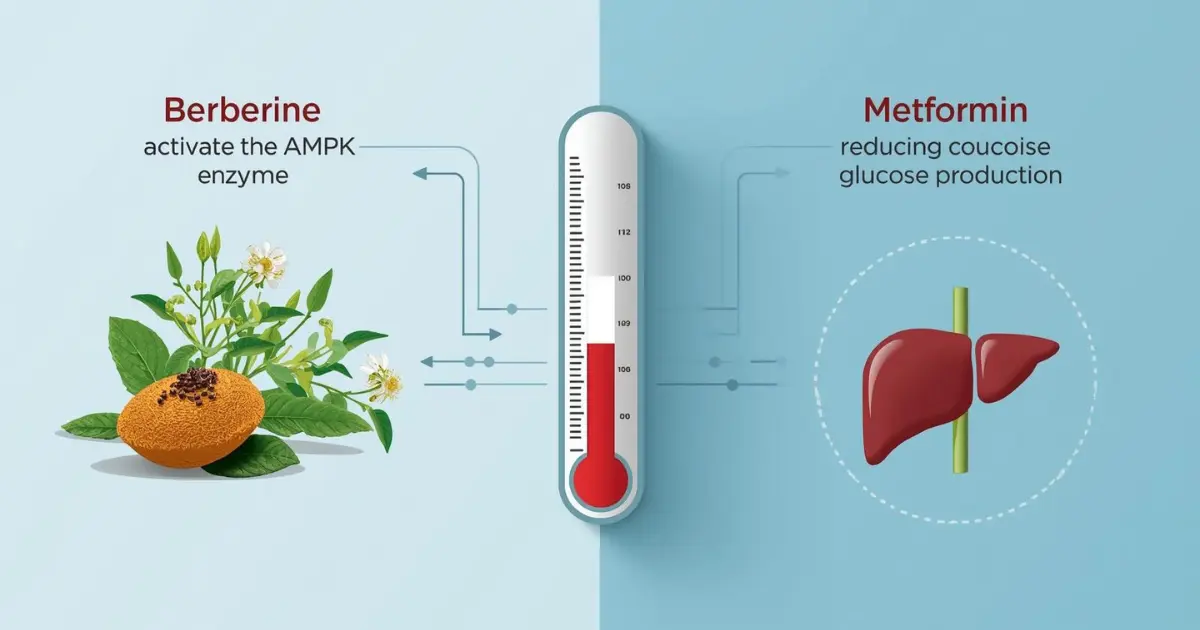
- Reduces glucose production in the liver (your liver naturally produces glucose, but in diabetes, it overproduces)
- Improves insulin sensitivity (helps your cells respond better to insulin)
- Decreases glucose absorption in the intestines (slows down how much sugar enters your bloodstream from food)
Typical dosage: 500-2,000mg per day, usually split into 2-3 doses with meals. Most people start at 500mg and gradually increase to minimize side effects.
Proven effectiveness: Clinical trials consistently show metformin reduces HbA1c (a 3-month average of blood sugar) by 1-2 percentage points. It also reduces the risk of cardiovascular complications—a major concern for diabetics.
The analogy: Think of metformin as a traffic controller for your blood sugar. It directs glucose where it needs to go and stops your liver from overproducing it.
It works. It’s proven. It’s trusted by millions.
According to the American Diabetes Association, metformin remains the preferred initial medication for type 2 diabetes due to its efficacy, safety profile, and low cost.
What Is Berberine? The Natural Alternative Explained
Berberine is a bioactive compound extracted from several plants, including goldenseal, barberry, Oregon grape, and tree turmeric. It has a distinctive yellow color and has been used in traditional Chinese medicine for over 3,000 years.
Historical use: Ancient practitioners used berberine-containing plants to treat digestive issues, infections, and metabolic disorders—long before modern science understood why it worked.
How it works: Berberine activates an enzyme called AMPK (adenosine monophosphate-activated protein kinase), often called the “metabolic master switch.” This is the same pathway that metformin targets. When AMPK is activated, it:
- Improves insulin sensitivity
- Reduces glucose production in the liver
- Enhances glucose uptake in cells
- Promotes fat burning
Regulatory status: Berberine is classified as a dietary supplement, not a medication. This means it doesn’t require a prescription, but it also hasn’t undergone the same rigorous FDA approval process as metformin.
Typical dosage: 500mg taken 2-3 times per day with meals (total: 1,000-1,500mg daily). Taking it with food reduces the risk of digestive discomfort.
The analogy: Berberine is like metformin’s cousin from the plant kingdom—they work through similar pathways but with different strengths.
A 2015 study published in the Journal of Ethnopharmacology found that berberine activates AMPK, the same metabolic pathway targeted by metformin. This explains why berberine produces similar blood sugar-lowering effects despite being a natural compound.
What makes berberine particularly interesting is that it offers additional benefits beyond blood sugar control, including improvements in cholesterol levels, triglycerides, and even gut health.
Berberine vs Metformin: How They Work (The Science)
Understanding the berberine vs metformin comparison requires looking at their mechanisms of action. Here’s where things get fascinating.
The AMPK Pathway: Where They Overlap
Both berberine and metformin activate AMPK, your body’s “energy accountant.” When activated, AMPK essentially tells your cells: “We need to use energy more efficiently.”
What AMPK does:
- Signals cells to absorb more glucose from the bloodstream
- Tells the liver to stop overproducing glucose
- Increases insulin sensitivity
- Promotes fat oxidation (burning fat for energy)
- Reduces inflammation
The key difference: Metformin is more potent at activating AMPK. It’s like comparing a professional athlete to a talented amateur—both can perform, but one does it more powerfully.
A 2014 study in Diabetes journal compared the AMPK activation of berberine vs metformin in liver cells. Metformin showed stronger activation at equivalent doses, but berberine still produced clinically significant effects.
Where They Differ: Potency and Additional Benefits
Metformin’s focus: It’s laser-focused on glucose control. That’s its job, and it does it exceptionally well. Metformin has been shown to reduce the risk of diabetes-related complications, including heart disease, kidney damage, and nerve damage.
Berberine’s broader effects: Beyond blood sugar, berberine offers:
- Lipid improvements: Reduces LDL cholesterol by 20-25mg/dL and triglycerides by 35-50mg/dL
- Anti-inflammatory properties: Reduces markers of chronic inflammation
- Antimicrobial effects: Has natural antibacterial and antifungal properties
- Gut health support: May improve gut microbiome composition
- Weight management: Some studies show modest weight loss (2-5 pounds over 3 months)
A 2015 meta-analysis in Evidence-Based Complementary and Alternative Medicine compared 14 studies and found berberine reduced fasting blood glucose similarly to metformin, with the added benefit of improving lipid profiles more significantly.
The verdict: If you need maximum glucose-lowering power, metformin wins. If you want comprehensive metabolic support with blood sugar benefits, berberine offers more versatility.
Berberine vs Metformin: Effectiveness for Blood Sugar Control
Let’s talk numbers. How do berberine vs metformin actually compare when it comes to lowering blood sugar?
Metformin’s Track Record
Clinical results:
- HbA1c reduction: 1.0-2.0 percentage points on average
- Fasting blood glucose reduction: 50-70 mg/dL
- Time to results: 4-8 weeks for noticeable changes, 12 weeks for maximum effect
- Success rate: Approximately 70-80% of patients see meaningful improvements
Example: If your HbA1c is 8.5% (prediabetic/diabetic range), metformin could bring it down to 6.5-7.5% (much healthier range).
Berberine’s Performance
Clinical results:
- HbA1c reduction: 0.7-1.5 percentage points on average
- Fasting blood glucose reduction: 20-50 mg/dL
- Time to results: 6-12 weeks for noticeable changes
- Success rate: Approximately 60-70% of users see improvements
Example: If your fasting glucose is 130 mg/dL (borderline high), berberine could bring it down to 100-110 mg/dL (normal range).
Clinical Studies: What the Research Shows
Key study #1 (2008): A landmark study in Metabolism compared berberine (500mg 3x/day) to metformin (500mg 3x/day) in 36 newly diagnosed type 2 diabetics over 3 months.
Results:
- Berberine: HbA1c decreased by 0.9%
- Metformin: HbA1c decreased by 1.1%
- Both groups saw similar improvements in fasting glucose and insulin sensitivity
Key study #2 (2012): Published in European Journal of Endocrinology, this study followed 116 diabetic patients for 3 months.
Results:
- Berberine reduced HbA1c by 0.7% and fasting glucose by 25 mg/dL
- Berberine also reduced total cholesterol by 18% and triglycerides by 23%
- Side effects were minimal (12% reported mild digestive issues)
Key study #3 (2015): A meta-analysis in Journal of Ethnopharmacology reviewed 27 randomized controlled trials with 2,569 patients.
Conclusion: Berberine was as effective as standard diabetes medications (including metformin) for lowering blood sugar, with the added benefit of improving lipid profiles.
Limitations to consider:
- Most berberine studies are smaller (50-200 participants) compared to metformin’s massive trials (thousands of participants)
- Berberine studies are typically shorter (3-6 months) vs. metformin’s decades of long-term data
- Many berberine studies come from China, where it’s more commonly used
The numbers don’t lie. Both work. Metformin edges ahead in pure glucose-lowering power, but berberine is impressively effective for a natural supplement.
Comparison table:
| Metric | Metformin | Berberine |
|---|---|---|
| HbA1c Reduction | 1.0-2.0% | 0.7-1.5% |
| Fasting Glucose Reduction | 50-70 mg/dL | 20-50 mg/dL |
| Time to Results | 4-8 weeks | 6-12 weeks |
| Research Quality | Extensive (60+ years) | Moderate (10-15 years) |
| Study Size | Large (1,000+ participants) | Small-Medium (50-200) |
Berberine vs Metformin: Side Effects and Safety
One of the most important factors in the berberine vs metformin debate is tolerability. What good is an effective medication if you can’t tolerate taking it?
Metformin Side Effects: What to Expect
Common side effects (30-50% of users):
- Diarrhea
- Nausea
- Abdominal cramping
- Bloating and gas
- Metallic taste in mouth
These gastrointestinal issues are the #1 reason people discontinue metformin. They typically occur during the first 2-4 weeks and often improve with time. Taking metformin with food and starting with a low dose helps minimize discomfort.
Long-term concern: Vitamin B12 deficiency
- Occurs in 10-30% of long-term metformin users
- Can lead to fatigue, nerve damage, and anemia
- Recommendation: Get B12 levels checked annually and consider supplementation
Rare but serious: Lactic acidosis
- Extremely rare (1 in 100,000 users per year)
- Life-threatening buildup of lactic acid in the blood
- Risk factors: Kidney disease, liver disease, heart failure, excessive alcohol use
- Contraindication: Metformin should NOT be used if you have severe kidney or liver problems
Who should avoid metformin:
- People with kidney disease (eGFR <30)
- Those with severe liver disease
- Individuals with heart failure
- Heavy alcohol users
- Anyone scheduled for surgery or imaging with contrast dye (temporary hold)
According to the Mayo Clinic, while metformin’s side effects can be uncomfortable, serious adverse events are rare when the medication is used appropriately and monitored by a healthcare provider.
Berberine Side Effects: Generally Milder
Common side effects (10-20% of users):
- Mild digestive discomfort (cramping, diarrhea)
- Constipation (less common than diarrhea)
- Headache (rare, usually temporary)
The key difference: Berberine’s GI side effects are less frequent and less severe than metformin’s. Most users tolerate it well, especially when taken with food.
Potential drug interactions:
- Antibiotics: Berberine has antimicrobial properties and may interact with certain antibiotics
- Blood thinners: May enhance the effects of warfarin or other anticoagulants
- Immunosuppressants: Could interfere with cyclosporine and similar medications
- Other diabetes medications: Risk of hypoglycemia if combined without medical supervision
Safety concerns:
- Pregnancy and breastfeeding: Not recommended (insufficient safety data)
- Children: Not studied in pediatric populations
- Long-term use: Limited data beyond 2 years of continuous use
Who should avoid berberine:
- Pregnant or nursing women
- Children under 18
- People taking blood thinners without doctor approval
- Those on immunosuppressant medications
Comparison table:
| Side Effect Category | Metformin | Berberine |
|---|---|---|
| GI Issues (frequency) | 30-50% | 10-20% |
| GI Issues (severity) | Moderate-Severe | Mild-Moderate |
| Vitamin Deficiency Risk | Yes (B12) | No known deficiencies |
| Serious Adverse Events | Rare (lactic acidosis) | Very rare |
| Drug Interactions | Moderate | Moderate |
| Long-term Safety Data | Extensive (60+ years) | Limited (10-15 years) |
The verdict: Berberine is generally better tolerated with fewer and milder side effects. However, metformin has a more thoroughly documented safety profile due to decades of use in millions of patients.
Berberine vs Metformin: Cost Comparison
Let’s talk money. Healthcare costs matter, and the berberine vs metformin price difference could influence your decision.
Metformin Costs
With insurance:
- Generic metformin: $4-20/month (often covered on low-tier formularies)
- Extended-release version: $10-30/month
Without insurance:
- Generic metformin: $10-40/month
- Extended-release: $30-80/month
- Discount programs (GoodRx, Blink Health): Can reduce cost to $4-15/month
Annual cost: $50-240/year with insurance, $120-480/year without
Berberine Costs
Quality matters: Not all berberine supplements are created equal. Look for:
- Standardized extract (typically 97% berberine HCl)
- Third-party tested (USP, NSF, or ConsumerLab verified)
- Reputable brands
Typical costs:
- Budget brands: $10-20/month (quality questionable)
- Mid-range brands: $20-30/month (decent quality)
- Premium brands: $30-45/month (highest quality, third-party tested)
Annual cost: $240-540/year
The math: Metformin is generally cheaper, especially if you have insurance. However, if you’re paying out-of-pocket and can’t tolerate metformin’s side effects, berberine’s slightly higher cost might be worth it to avoid discomfort.
Cost matters. Metformin wins here. But berberine isn’t expensive compared to many supplements.
| Cost Factor | Metformin | Berberine |
|---|---|---|
| Monthly (with insurance) | $4-20 | N/A (not covered) |
| Monthly (without insurance) | $10-40 | $15-40 |
| Annual (with insurance) | $50-240 | N/A |
| Annual (without insurance) | $120-480 | $180-480 |
Berberine vs Metformin: Who Should Choose Which?
So which one is right for you? The berberine vs metformin decision isn’t one-size-fits-all. Here’s how to think about it.
When Metformin Is the Better Choice
Choose metformin if:
- You have diagnosed type 2 diabetes (HbA1c ≥6.5% or fasting glucose ≥126 mg/dL)
- Your blood sugar is significantly elevated and needs aggressive management
- You have a history of cardiovascular disease (metformin has proven cardioprotective effects)
- You want maximum effectiveness backed by decades of research
- You have insurance coverage that makes it very affordable
- Your doctor recommends it as first-line treatment
Real-world example: John, 58, was diagnosed with type 2 diabetes with an HbA1c of 8.2%. His doctor prescribed metformin 1,000mg twice daily. Within 3 months, his HbA1c dropped to 6.8%, and he experienced only mild, temporary digestive issues.
Metformin is the gold standard for a reason. If you have established diabetes and need proven, powerful glucose control, it’s hard to beat.
When Berberine Makes More Sense
Choose berberine if:
- You have prediabetes (HbA1c 5.7-6.4% or fasting glucose 100-125 mg/dL) and want to prevent progression
- You have mild insulin resistance and want natural support
- You can’t tolerate metformin due to severe GI side effects
- You prefer natural supplements over prescription medications (when medically appropriate)
- You want additional metabolic benefits (cholesterol, triglycerides, weight management)
- You don’t have insurance and metformin costs are prohibitive
Real-world example: Sarah, 45, was diagnosed with prediabetes (HbA1c 6.1%). She wanted to avoid medication if possible. Her doctor approved trying berberine 500mg three times daily along with diet and exercise changes. After 4 months, her HbA1c dropped to 5.6% (normal range), and she also saw improvements in her cholesterol levels.
Berberine shines for prevention and early intervention. It’s also an excellent option if metformin isn’t tolerated or if you want a more holistic approach to metabolic health.
If you’re looking for a comprehensive blood sugar supplement that includes berberine along with other synergistic ingredients, check out my detailed GLPRO reviews—it combines berberine with cinnamon, chromium, and more for multi-pathway support.

Optimize Your Glucose & Unlock Natural Weight Loss with GLPRO!
Support healthy blood sugar levels, boost your natural energy, and sharpen mental clarity. GLPRO’s proprietary blend assists in maintaining a healthy fat-burning metabolism.
Claim Your Discounted GLPRO Now! →Can You Take Berberine and Metformin Together?
This is one of the most common questions I get about berberine vs metformin: can you combine them?
The short answer: Possibly, but ONLY under medical supervision.
The potential benefits: Some research suggests that combining berberine and metformin may produce additive or even synergistic effects. A 2015 study in Metabolism found that patients who added berberine to their existing metformin regimen saw an additional 0.5% reduction in HbA1c compared to metformin alone.
The analogy: Combining them is like adding two engines to a car—more power, but you need an expert mechanic to make sure it’s safe.
The risks:
- Hypoglycemia (low blood sugar): The combined effect could lower blood sugar too much, causing dangerous symptoms like dizziness, confusion, shakiness, and even loss of consciousness
- Increased side effects: Both can cause digestive issues, so combining them might worsen GI discomfort
- Drug interactions: Berberine may affect how your body metabolizes metformin
What the experts say: Most endocrinologists are open to patients using berberine alongside metformin, but they’ll want to:
- Monitor blood sugar levels closely (daily testing initially)
- Potentially reduce metformin dosage to compensate
- Watch for signs of hypoglycemia
- Adjust the regimen based on results
Critical warning: Never start taking berberine if you’re already on metformin (or any diabetes medication) without first consulting your doctor. The risk of dangerously low blood sugar is real and potentially life-threatening.
If your doctor approves the combination, start with a low dose of berberine (500mg once daily) and monitor your blood sugar carefully. Increase gradually only if tolerated and under medical guidance.
The Bottom Line: Berberine vs Metformin in 2026
After reviewing all the evidence, here’s my take on the berberine vs metformin debate:
Metformin remains the gold standard for diagnosed type 2 diabetes. It’s more potent, has decades of safety data, is FDA-approved, and has proven cardiovascular benefits. If you have diabetes and your doctor recommends metformin, there’s good reason to follow that advice.
Berberine is a legitimate natural alternative with impressive clinical results. It’s particularly valuable for prediabetes, insulin resistance, or as complementary support. It offers broader metabolic benefits beyond just blood sugar and is generally better tolerated.
This isn’t a competition. They’re different tools for different situations. The best choice depends on:
- The severity of your blood sugar issues
- Your tolerance for side effects
- Your personal preferences (natural vs. pharmaceutical)
- Your insurance coverage and budget
- Your doctor’s clinical judgment
- Your overall health goals
My recommendation: If you have established diabetes, start with what your doctor recommends (likely metformin). If you have prediabetes or mild insulin resistance, berberine is worth discussing with your healthcare provider. If you can’t tolerate metformin, berberine is an excellent alternative to explore.
Both work. Both have value. Choose wisely with your doctor.
The most important thing? Don’t let perfect be the enemy of good. Whether you choose berberine, metformin, or a combination, taking action to manage your blood sugar is what matters most. Combine your choice with a healthy diet, regular exercise, stress management, and adequate sleep for the best results.
Frequently Asked Questions: Berberine vs Metformin
1. Is berberine as effective as metformin for diabetes?
Berberine is impressively effective for a natural supplement, with studies showing it can reduce blood sugar similarly to metformin in mild to moderate cases. However, metformin is generally more potent and has decades more research. For established type 2 diabetes, metformin remains the gold standard, but berberine is a strong option for prediabetes or as complementary support.
2. Can I replace metformin with berberine?
Never replace prescribed metformin with berberine without your doctor’s approval. If you’re currently taking metformin for diabetes, stopping it could cause dangerous blood sugar spikes. However, if you’re interested in trying berberine, discuss it with your healthcare provider—they may adjust your treatment plan or approve berberine for prediabetes or complementary use.
3. What are the side effects of berberine vs metformin?
Both can cause digestive issues (diarrhea, nausea, cramping), but metformin’s GI side effects are more common (30-50% of users) compared to berberine (10-20%). Metformin can also cause vitamin B12 deficiency with long-term use. Berberine is generally better tolerated but has less long-term safety data. Both should be taken with food to minimize discomfort.
4. How much berberine equals metformin?
There’s no exact equivalence, but research suggests 1,500mg/day of berberine (500mg 3x/day) produces blood sugar reductions comparable to 1,000-1,500mg/day of metformin. However, metformin is typically more potent milligram-for-milligram. Dosing should always be individualized based on your blood sugar levels and response, under medical supervision.
5. Is berberine safer than metformin?
Berberine generally has fewer and milder side effects than metformin, making it “safer” in terms of tolerability. However, metformin has 60+ years of safety data and is FDA-approved, while berberine’s long-term safety (beyond 1-2 years) is less studied. Both are considered safe when used appropriately, but metformin’s safety profile is more thoroughly documented.
6. Can I take berberine and metformin together?
Possibly, but only under medical supervision. Some studies suggest combining berberine and metformin may enhance blood sugar control, but it also increases the risk of hypoglycemia (dangerously low blood sugar) and drug interactions. Never combine them without your doctor’s explicit approval and monitoring. Your doctor may need to adjust dosages to ensure safety.

Holly Lee is the founder of Holly Lee Health and a passionate wellness researcher with over 10 years of experience in nutrition and holistic living. Frustrated by misleading health advice, she started this platform to provide honest, science-backed reviews of supplements and fitness strategies. Her goal is to help you make informed decisions for a healthier life.
1 thought on “BERBERINE VS METFORMIN 2026: WHICH IS BETTER FOR BLOOD SUGAR CONTROL?”